Open

Author Archives: Dr. Mazen Dayeh

Author: Dr. Mazen Dayeh

Dr. Muhammad Mazen Dayeh is a top fertility expert. He completed his Primary Medical Qualification (PMQ) from Saint Petersburg I.P. Pavlov State Medical University in Russia and acquired his specialty training and Ph.D. at Russian Academy for Medical Sciences. He is considered a Consultant of both OB/GYN and Reproductive Endocrinology/Infertility. His special interests lie both in male and female infertility, Reproductive Immunology, and Recurrent Implantation Failures. He is recognized for his expertise in treating and evaluating infertility and recurrent pregnancy losses, IVF, and laparoscopic surgical techniques. Currently, he is performing over 600 IVF cycles per year.

What is Natural Cycle IVF, and how does it work?

What is Natural Cycle IVF, and how does it work?

Many couples dream of becoming parents, but sometimes conception doesn’t happen easily. In vitro fertilisation (IVF) has helped millions of people achieve pregnancy, yet not everyone feels comfortable with strong medications or multiple injections. Natural Cycle IVF offers a softer and more natural path. It works with your body’s rhythm rather than overriding it. At Dr Mazen IVF Clinic in Dubai, we focus on gentle, personalised fertility treatments that put your comfort and wellbeing first.

Understanding Natural Cycle IVF

In the case of traditional IVF, hormone injections are given to stimulate the ovaries to produce several eggs. This can increase the number of embryos but can also have possible side effects, cause emotional stress, and increase expenses.

In contrast, Natural Cycle IVF follows your natural cycle. Instead of using intensive medications, it lets your body naturally develop only one mature egg. We aim to retrieve that one healthy egg and fertilise it in a precisely controlled laboratory environment. This approach respects the natural processes of ovulation while minimising medical interference.

At the Dr Mazen IVF Clinic, our fertility specialists closely monitor your cycle with ultrasound and hormone testing. The natural change in your hormone production allows your egg to be retrieved at exactly the best time to maximise the chances of success.

Natural Cycle IVF: How It Works, Step by Step

Here’s what typically happens during Natural Cycle IVF in Dubai at our clinic:

1. Consultation and Checkup

Your first visit will involve a thorough discussion of your medical history and fertility background. Dr Mazen and his team may conduct blood tests or examine your ovaries to determine if Natural Cycle IVF is an option for you.

2. Monitoring Your Cycle

We monitor the growth of your dominant follicle-the small, fluid-filled pocket containing your egg- throughout your cycle via ultrasound scans and simple blood tests. Since Natural Cycle IVF aligns with your body’s natural timing, little to no medication is required.

3. Timing Ovulation

Our team monitors your body’s natural LH surge, which signals that ovulation is near. Once the egg is almost ready for release, we may give a small trigger shot to help it be released at exactly the right time for retrieval.

4. Egg Retrieval

The procedure for egg retrieval is gentle and short; it takes about 10 to 15 minutes with light sedation. Since only one egg is being collected, your body undergoes less stress compared to conventional IVF cycles.

5. Fertilisation and Embryo Growth

Collected eggs are then fertilised in our advanced laboratory using your partner’s or a donor’s sperm. The embryo is then monitored for several days to ensure it is developing healthily.

6. Embryo Transfer

The embryo, when it reaches the right stage, which is usually three to five days later, is placed in the uterus through a thin, soft catheter. The procedure is quick, painless, and does not require anaesthesia.

7. Pregnancy test

About two weeks later, a blood test is conducted to determine whether or not implantation has been successful and pregnancy has started.

Also Read: When to Take Female Fertility Tests

Who Can Benefit from Natural Cycle IVF?

Natural Cycle IVF in Dubai is a very suitable option for women who:

  • Have regular periods and natural ovulation
  • Want to avoid strong medications or can’t tolerate them
  • Have a low ovarian reserve but still produce at least one quality egg
  • Have not responded well to stimulation in previous attempts at IVF
  • Want a more natural and less invasive fertility treatment
  • Preferring a less-expensive and simpler form of IVF

This could be a safer option for women with conditions such as polycystic ovary syndrome or those who are at risk of OHSS.

Key Benefits of Natural Cycle IVF

Other than being gentle, there are numerous advantages to choosing Natural Cycle IVF.

1. Less Stress on the Body

Because the process follows your natural cycle, you avoid the heavy hormone doses in conventional IVF. This translates to fewer side effects and a more comfortable experience.

2. Less Expensive Treatments

By taking few or no medications, the Natural Cycle IVF cost is usually less compared to standard IVF. Thus, it becomes an affordable option for many couples.

3. Better Egg Quality

The single egg that your body naturally chooses is usually healthier and stronger, which can increase the Natural IVF cycle success rate.

4. Can Be Repeated Easily

Because your body isn’t overstimulated, you can repeat Natural Cycle IVF in back-to-back cycles without long breaks.

5. Less Emotional Pressure

The process is often easier emotionally for many women because it feels closer to a natural conception.

Natural Cycle IVF Cost in Dubai

The cost of Natural Cycle IVF at Dr Mazen IVF Clinic in Dubai depends on each patient’s situation. Prices can vary depending on tests, medication use, and specific procedures. Still, since fewer drugs and appointments are involved, it’s generally more cost-effective than stimulated IVF.

Our clinic believes in transparency and fairness in pricing. Our team will discuss all costs with you right from the beginning so that there are no surprises. We also offer flexible plans with the goal of making treatment as stress-free as possible.

Natural IVF Cycle Success Rate

While Natural Cycle IVF normally yields just a single egg per cycle, that egg is usually of high quality. The success rate of the Natural IVF cycle depends on many factors, like age, health, and the woman’s fertility history.

  • Women under 35 can achieve success rates between 15% and 25% per cycle
  • Women between 35 and 40 usually experience success of 10% to 15% per cycle.
  • For women over 40, the rate is lower, but many still achieve pregnancy with consistent care.

At Dr Mazen IVF Clinic, every part of your treatment, from monitoring to embryo transfer, is designed to give you the best possible outcome.

Why Choose Dr Mazen IVF Clinic for Natural Cycle IVF in Dubai?

Dr Mazen IVF Clinic is among the distinguished IVF centres in Dubai due to its advanced technological infrastructure combined with compassionate care. We also recognise that every journey related to fertility is unique, and so we tailor every plan to fit individual needs.

Here’s what makes our clinic different:

  • Modern fertility laboratory with the latest equipment
  • Tailor-made care plans by specialists with expertise
  • A warm, supportive atmosphere in which patient comfort is paramount.
  • A track record of successful outcomes

Natural Cycle IVF in Dubai at Dr Mazen IVF Clinic is all about approaching parenthood through a natural, well-maintained cycle with expertise and care.

Conclusion:

Natural Cycle IVF provides a gentle yet effective route to pregnancy, utilising your body’s own rhythm. It gives hope to those who want to avoid strong medications or who simply prefer the path of natural conception.

At Dr Mazen IVF Clinic in Dubai, our skilled team is here to guide you every step of the way. If you are looking into your IVF options and want something safe, affordable, and natural, then reach out to us to learn more about Natural Cycle IVF in Dubai, cost and procedure.
Get Direction

Difference Between IUI and IVF

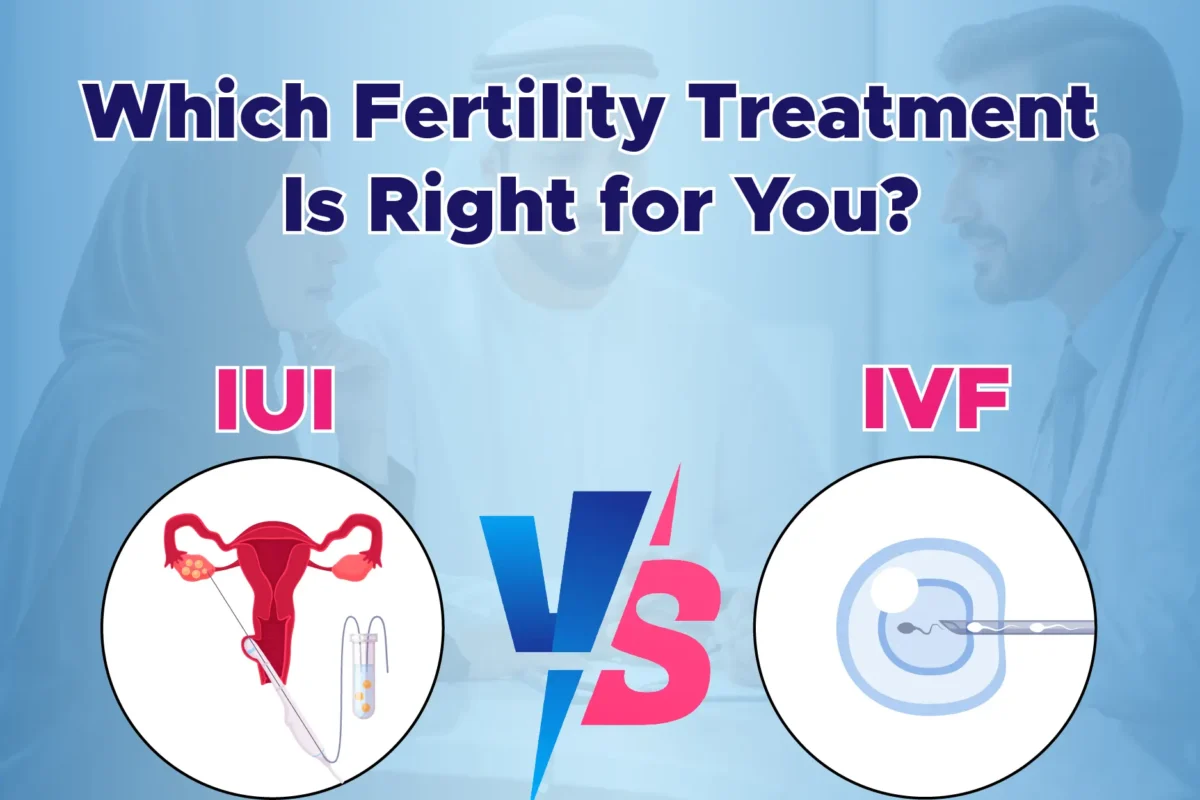
IUI Vs. IVF: Which Fertility Treatment Is Right for You?

For many couples, the dream of starting a family is one of life’s biggest. But sometimes, getting pregnant doesn’t come as easily as one may think. If you’ve been trying for a while without success, your doctor might refer you to fertility treatments like IUI or IVF.

Both treatments can help you have a baby, but they work in different ways. Understanding the difference between IUI and IVF can help you decide which option may be right for you.

What is IUI?

IUI stands for Intrauterine Insemination, a simple, less expensive fertility treatment, which brings the sperm closer to the egg at the right time for fertilisation.

Here’s how it works:

  1. Your doctor will monitor your ovulation cycle to find when you’re most fertile.
  2. The sperm specimen, which is your partner’s or a donor’s, is washed and prepared in the laboratory.
  3. The sperm is then placed directly into your uterus by a thin, soft tube.

This process enhances the possibility of the sperm meeting the egg naturally. Everything else takes place inside your body as it would during a naturally conceived pregnancy.

IUI tends to be among the first treatments for doctors because it is simple, quick, and does not involve surgery.

What is IVF?

IVF stands for In Vitro Fertilisation; this is the more advanced treatment. “In vitro” means “in the lab.” In IVF, the sperm and egg meet outside of the body, and after fertilisation, the embryo is placed into the uterus.

The steps of the IVF process include:

  1. You’ll take fertility medicines to help your ovaries produce several eggs.
  2. Gently, the eggs are retrieved from your ovaries.
  3. The sperm is added to the eggs in a lab dish so fertilisation can happen.
  4. The best embryo is chosen and transferred into your uterus.

IVF gives doctors more control over the fertilisation process and is generally used when other treatments haven’t worked.

The Difference Between IUI and IVF

Understanding the difference between IUI and IVF will provide insight into which fertility route to take. Let’s break it down simply:

Feature IUI IVF
Where fertilisation happens Inside the body Outside the body (in the lab)
Egg stimulation Often uses mild medication or none Uses stronger fertility drugs
Invasiveness Non-surgical, simple procedure Involves egg collection and embryo transfer
Success rate Lower (around 10–20% per cycle) Higher (40–60% per cycle, depending on age)
Cost Less expensive More costly
Time Quick and simple Takes several weeks per cycle
Best for Mild fertility problems Complex fertility issues or older age


In other words, IUI is less invasive and purely a natural approach for couples with mild fertility issues, while IVF offers more control and higher success rates in more complex cases.

Who should attempt IUI?

IUI is usually recommended in the following cases:

  • You have unexplained infertility (no known cause).
  • Mild sperm problems – low count or slow movement
  • You have cervical mucus abnormalities that impede sperm.
  • You’re using donor sperm.
  • You have ovulation problems, yet your fallopian tubes are open.

IUI is often the first step because of its affordability and ease. Most couples would start with a few cycles of IUI and then, if necessary, progress to IVF.

Who Should Try IVF?

IVF is considered a better option when:

  • You have blocked or damaged fallopian tubes.
  • You have severe male infertility (very low sperm count).
  • You have endometriosis or polycystic ovary syndrome.
  • You are over 35, and time is precious.
  • You’ve tried IUI or other treatments without success.

IVF also allows advanced options like ICSI, in which a single sperm is injected directly into the egg, and genetic testing to ensure that the healthiest embryos are used.

Success Rates of IUI versus IVF

One of the biggest differences between IUI and IVF is their success rate.

  • For IUI, the success rate per cycle is about 10–20%, depending on age and health.
  • For IVF, the success rate is much higher — about 40–60% for women under 35, and a bit lower for women over 40.

IVF yields better results since doctors can select healthy eggs and embryos, improving your chances for pregnancy.

ALSO Read: What is IVF and the success rate of IVF in Dubai?

Costs: IUI vs. IVF

Another important difference between IUI and IVF is the cost.

IUI is less expensive since it omits the collection of the egg, fertilisation in the laboratory, and embryo culturing. More medicines and laboratory work, as well as more medical procedures, make IVF more expensive.

However, if you require multiple attempts at IUI, the costs add up. Sometimes, IVF may actually be more cost-effective in the long run if you need faster or more reliable results.

ALSO Read:

Which One Is Right for You?

The choice between IUI and IVF will be based on your health, age, fertility history, and personal goals. There is no one-size-fits-all answer.

At Dr Mazen IVF Clinic, we take the time to hear your story. Our fertility specialists will go through your medical history with you, perform detailed tests, and devise a treatment plan fitting for your body and budget.

We believe in honest advice: We’ll help you start with the simplest, most natural option when possible and go to advanced treatments only when necessary.

Final Thoughts

Both IUI and IVF offer real hope to couples struggling with infertility. One of the main differences between the two is how and where fertilisation actually occurs, but their premise remains the same: to help you bring home a healthy baby.

Take the next step in your fertility journey with Dr Mazen IVF Clinic to guide you every step of the way. Our dedicated care team, the most advanced technology, and personalised care can help make your dream of parenthood a reality.

Best Age to Try IVF in Dubai

What Is the Best Age to Try IVF in Dubai?

For most couples, creating a family doesn’t always turn out as fast and simple as they wished. Over the past few years, IVF (In Vitro Fertilization) has proven to be a widely used cure for fertility issues. Dubai, as one of the top medical hubs in the Middle East, welcomes visitors from around the globe for IVF procedures. But among the most frequently asked questions is: “What is the ideal age to undergo IVF in Dubai?”

The reality is, age is a significant determinant of the possibility of IVF success. Let us demystify this for you so that you can make intelligent choices regarding your options.

What Is the Age Limit for IVF?

In Dubai, there are certain laws regarding IVF treatment, particularly related to age. As per the laws, women can generally have IVF until they are about 50 years old. Just because you can attempt IVF at this age does not mean it is the ideal time for success.

Most fertility doctors in Dubai advise women to attempt IVF much earlier since egg quality declines with age. In the case of men, sperm quality also tends to decline, but usually at a slower rate. Thus, while law permits women to try IVF until their late forties, doctors will usually advise against delay since the likelihood of a healthy pregnancy decreases with age.

What Is the Best Age to Begin IVF?

The optimal time to begin IVF is typically in your late 20s or mid-30s. Women at this age tend to have healthier eggs, and the likelihood of forming good-quality embryos is much greater. Many fertility experts state that women younger than 35 have optimal results with IVF.

That being said, most women in Dubai and other places prioritize their career, money, or individual ambitions over having a family first. Due to this, most women start IVF in their late 30s or even early 40s. Although possible, the success rates are less than those of younger women.

In simple terms:

  • Under 35: Ideal age bracket with maximum chances of success.
  • 35–40: Still good possibilities, but slightly less than in younger women.
  • Over 40: Possible to succeed, but egg quality tends to be a problem, and donor eggs occasionally are suggested.

ALSO Read: Planning a Pregnancy: The Role of Age in Female Fertility

Is IVF Usually Successful First Try?

IVF is something that many couples wish would succeed the first time. Although this can happen, it is not certain. Success varies based on things like age, medical conditions, lifestyle, and the skill of the clinic.

On average, IVF success rates are approximately as follows:

  • Women aged under 35: Approximately 40–50% chance of success per cycle.
  • Women aged 35–40: Approximately 25–35% chance per cycle.
  • Women aged over 40: Approximately 10–15% chance per cycle.

This is to say that it may take more than once for a successful pregnancy to occur. Some couples get lucky on the first attempt, but others take two or three cycles. Physicians in Dubai tend to prepare couples for this fact so that they won’t get disappointed when the first round fails.

ALSO Read: What is IVF and the success rate of IVF in Dubai?

How can I improve my chances of IVF success?

If you are going to try IVF, you can do several things to maximize your success. Although nothing is guaranteed, you have control over a lot with lifestyle.

  1. Healthy Diet

A well-balanced diet full of fruits, vegetables, whole grains, lean proteins, and healthy fats can help. Fruits and vegetables that are high in antioxidants, such as berries and green leafy vegetables, may help keep eggs and sperm healthy.

  1. Have a Healthy Weight

Being overweight or underweight can impact hormone balance and fertility. Doctors typically advise achieving a healthy body mass index (BMI) before commencing IVF.

  1. Don’t Smoke and Drink

Smoking and excessive alcohol consumption can damage egg and sperm quality. Eliminating these increases your chances.

  1. Reduce Stress

IVF is also an emotionally testing time. Stress management modalities such as yoga, meditation, or even slow breathing exercises will keep your body and mind in top condition.

  1. Regular Exercise

Light to moderate exercise (such as walking, swimming, or yoga) keeps the circulation and hormones in check. Just don’t overdo it, as that will lower your fertility.

  1. Follow Medical Advice Closely

Your fertility physician will present a customized plan. Adhering to medication regimens, going to all follow-up appointments, and asking questions when you are uncertain are important to increasing results.

Why Dubai Is a Popular Choice for IVF

One reason so many couples consider Dubai for IVF is the high standard of medical care. The city has advanced clinics with experienced doctors who specialize in fertility treatments. In addition, Dubai’s regulations ensure patient safety, and many clinics offer tailored programs with modern technology to improve outcomes.

Also, for international couples, Dubai provides a helpful environment with excellent care and relatively speedy access to the treatments when compared with some nations where waiting lists are long.

Final Thoughts: Picking the Right Moment for IVF

So, when is the best time to attempt IVF? The response would vary based on your unique situation, but generally:

  • It’s ideal to do IVF before 35 for better success.
  • You can legally try IVF up to about 50 years of age in Dubai, but the success rate lowers drastically with age.
  • It is not successful the first time for sure, and it could take multiple attempts before pregnancy is achieved.
  • You may enhance success chances with healthy life habits, managing stress, and consultation with a trustworthy fertility specialist.

If you are thinking of IVF in Dubai, the initial step is to visit a professional fertility doctor. They will advise you on the basis of your age, health, and individual situation. Keep in mind that every path is distinctive, and although statistics are helpful, individual results may differ significantly.

Contact Information:

Preparing for IVF in Dubai Lifestyle, Diet, and Emotional Readiness

Preparing for IVF in Dubai: Lifestyle, Diet, and Emotional Readiness

Embarking on the path to parenthood may be one of life’s most exhilarating and sentimental experiences. For a lot of them, in vitro fertilisation (IVF) provides an opportunity to realise that aspiration. IVF for couples in Dubai is now a viable and effective alternative, with sophisticated clinics, specialist physicians, and supportive treatment through the process. However, treatment can only start if proper preparation—both physical and psychological—is in place, which can make a significant impact on your overall experience and outcomes.

1. Knowing the IVF Process

IVF is a procedure where eggs and sperm are brought together outside of the body in a lab and formed into embryos, which are then inserted into the uterus. The process includes a few steps, like ovulation stimulation, egg retrieval, fertilisation, and embryo transfer. Every step demands patience, faith in your healthcare team, and a healthy mind and body.

At Dr Mazen IVF, couples receive a detailed plan tailored to their medical history and fertility goals. Preparing for this plan can help ensure your body responds well to the medication and that you’re mentally ready for the steps ahead.

2. Lifestyle Changes That Support IVF Success

Your lifestyle has a significant impact on reproductive health. Making small but steady changes can enhance the quality of eggs and sperm, balance hormones, and get your body ready for pregnancy.

  • Stop smoking and reduce alcohol: Smoking and heavy drinking can impact fertility and IVF success rates. Stopping these several months before treatment can allow your body to heal and enhance egg and sperm quality.
  • Exercise lightly: Swimming, walking, or yoga can lower stress levels and improve circulation. Steer clear of intense exercise once you begin hormone injections, since it can influence your ovaries.
  • Sleep: Have 7–8 hours of quality sleep at night. Resting helps level hormones and boost your immune system.
  • Stay hydrated: Adequate water intake supports the natural detox of your body and keeps cervical mucus healthy.

Keep in mind, however, that lifestyle modifications don’t need to be extreme. Even gradual, minor changes can lay a healthier foundation for IVF treatment.

3. The Importance of Diet Before and During IVF

Diet is perhaps the most crucial aspect of IVF preparation. A healthy diet provides your body with the necessary vitamins and minerals needed for egg and sperm growth, hormone creation, and overall reproductive well-being.

  • Eat more whole foods: Opt for fruits, vegetables, whole grains, lean proteins, and healthy fats. They contain antioxidants that shield cells from damage.
  • Add fertility-promoting nutrients: Include nutrient-dense foods containing folic acid (spinach, avocado, lentils), omega-3 fatty acids (salmon, chia seeds, walnuts), and vitamin E (almonds, sunflower seeds). These nutrients are reported to enhance fertility and embryo well-being.
  • Restrict processed foods: Reduce the intake of sugary foods, fast food, and salty meals that result in inflammation and hormonal imbalance.
  • Achieve a healthy weight: Underweight or excess weight can impair ovulation and IVF success. A healthy body mass index (BMI) can be achieved by eating nutritious meals and exercising regularly.

Couples should also sit down and talk to their fertility doctor about supplements. Some that are often suggested include prenatal vitamins, CoQ10, and vitamin D, but take only what your doctor recommends.

ALSO Read: IVF Eligibility in Dubai: Who Can Benefit from Treatment?

4. Emotional Preparation and Mental Health

The IVF process may be stressful on an emotional level. Hormone injections, doctor’s visits, and the waiting time between procedures can provoke anxiety or worry. Caring for your mental well-being is as vital as taking care of your physical self.

  • Reduce stress: Practice relaxation methods like meditation, deep breathing, or soothing yoga. Being in nature or engaging in activities you like may also help to soothe the mind.
  • Get support: Discussion with your partner, friends, or support group can help you not feel as isolated. A lot of couples find it comforting to share with others who are experiencing the same. 
  • Be educated: Knowledge of every step of IVF minimises fear and uncertainty. Don’t hold back from asking your physician questions, no matter how minor they may be.
  • Be patient with yourself: It’s natural to experience a combination of hope, fear, and excitement. Give yourself time to navigate these feelings and keep in mind that everyone’s path is different.

At Dr Mazen IVF, emotional support is an integral part of the treatment process. The staff recognises that fertility treatment is not merely about medical procedures—it’s about supporting couples through a very personal part of their life.

5. Preparing as a Couple

IVF is an experience shared by both partners that calls for teamwork, communication, and emotional intimacy. Both of them should be involved and supported during the process.

  • Accompany each other to appointments: Knowing the procedure and its phases can enable both partners to be informed and interested.
  • Share tasks: Help manage each other through medication schedules, dietary plans, and stress relief.
  • Maintain open communication: Share your feelings and expectations. Listening to one another consolidates your relationship and lessens emotional stress.

Couples who go through IVF as a well-united couple tend to find it easier to handle and more meaningful.

6. Last Thoughts: Hope and Preparation Hand in Hand

Preparation for IVF is not just about medical procedures—it’s about becoming the best version of yourself, physically and emotionally. A healthy lifestyle, nutritious diet, and mental preparation all help enhance your chances of success as well as make the process easier.

If you are thinking of IVF for couples in Dubai, preparation can take you far. With skilled care, caring guidance, and up-to-date technology, Dr Mazen IVF offers an empathetic setting where your family-building dream can become a reality.

Next Read:

IVF Eligibility in Dubai: Who Can Benefit from Treatment?

IVF Eligibility in Dubai: Who Can Benefit from Treatment?

Becoming a parent is one of the most cherished dreams of many couples. However, natural conception may not be easy at times. With the help of advanced fertility treatments that are made possible by modern medical science, it is now easy for couples to become parents. One of the most sought-after and successful fertility treatments of the present times is IVF treatment in Dubai.

In this blog, we will discuss IVF Eligibility in UAE, who can be benefited by IVF, and who is not eligible for it.

What is IVF Treatment?

IVF is an acronym for In Vitro Fertilization. IVF is fertilizing a woman’s egg with a man’s sperm outside of the body, in a lab. Once fertilized, the embryo (the early formation of a baby) is inserted inside the woman’s womb to develop naturally.

This procedure is usually applied when the couples have been attempting to conceive over a long period but have failed to do so naturally. Couples at Dr. Mazen IVF Clinic are given individualized care, cutting-edge medical technology, and psychological support throughout the process.

Who Can Benefit from IVF?

Most couples in Dubai and around the UAE opt for IVF after other treatments for their infertility have failed. Let us examine the primary reasons one may undergo IVF treatment in Dubai and who may gain the most from it.

  • Couples with Blocked Fallopian Tubes

If a woman has blocked or damaged fallopian tubes, the sperm cannot travel into the egg spontaneously. IVF bypasses the fallopian tubes entirely, so it provides a better opportunity for a woman to become pregnant.

  • Low Sperm Count or Poor Sperm Quality

Sometimes the problem might lie with the man. Low sperm count, inability of the sperm to move well, or abnormal sperm shape might prevent natural conception. In IVF, one healthy sperm is enough to be used to conceive an egg and hence enhance the chances of success.

To improve sperm health, you can check out our Tips to Boost Male Fertility & Sperm Count

  • Ovulation Problems in Women

Certain women do not ovulate regularly, so it is difficult for them to conceive. With IVF, the ovaries can be stimulated to release eggs at the appropriate time so fertilization can be done in the lab.

  • Unexplained Infertility

There are instances when all tests provide normal findings, but a couple still cannot get pregnant. This is referred to as unexplained infertility. In these situations, IVF treatment in Dubai can do the job by providing doctors with complete control over the process of fertilization.

  • Older Women or Age-Related Infertility

When women age, the number and quality of eggs decline. With women over 35, IVF is a good option for pregnancy because physicians can select the highest quality eggs and embryos.

For more insights on how age affects fertility, read our Planning a Pregnancy: The Role of Age in Female Fertility

  • Women with Endometriosis or PCOS

Endometriosis or polycystic ovary syndrome (PCOS) may lead to fertility problems. IVF usually breaks through these obstacles by bringing eggs and sperm together outside the body.

At Dr. Mazen IVF Clinic, each case is thoroughly evaluated, and treatment is customized based on each patient’s individual needs.

To understand more about how PCOS affects fertility, read our How Does PCOS Affect Fertility in Women? blog.

Who is Not Eligible for IVF?

IVF is a potent treatment, but it is not for all. There are some medical, legal, and personal considerations that can render a person ineligible. Knowing Who is not eligible for IVF? is extremely crucial prior to proceeding.

  • Women with Certain Health Conditions

If a woman has severe heart disease, diabetes that is not controlled, or any other medical condition that will make pregnancy unsafe, doctors might suggest against IVF. The safety of the mother is always of primary importance.

  • Extremely Low Ovarian Reserve

If the ovaries are no longer making eggs (for instance, after menopause), it is not possible to have IVF with a woman’s own eggs.

  • Untreated Infections or Uterine Problems

Prior to IVF, medical professionals screen for infection or uterine abnormalities like fibroids or scarring. If these exist and are not addressed, IVF might be unsuccessful.

  • Couples with Legal or Documentation Issues

In the UAE, IVF procedures are legally regulated. Marital heterosexual couples can only be treated with IVF through their own sperm and egg. IVF Eligibility in UAE ensures treatments are conducted ethically and legally based on the country’s medical laws.

  • Severe Genetic Disorders

In a few exceptional situations, if the couple has severe genetic diseases that cannot be treated by screening, IVF might not be suggested until adequate genetic counseling is performed.

  • Lifestyle Issues

Smoking, alcoholism, drug abuse, and extreme obesity can all decrease IVF success rates. Physicians might suggest lifestyle modification prior to approving IVF.

What to Expect Throughout IVF Treatment in Dubai

IVF treatment typically involves a number of steps:

  1. Consultation and Testing: The couple visits a fertility doctor, like Dr. Mazen, for a complete examination and consultation.
  2. Ovarian Stimulation: The woman undergoes fertility medication to stimulate her ovaries to release multiple eggs.
  3. Egg Retrieval: Eggs are then gently harvested from the ovaries.
  4. Fertilization: Eggs are combined with sperm in a laboratory.
  5. Embryo Transfer: A healthy embryo is transferred into the woman’s uterus.
  6. Pregnancy Test: After about two weeks, a test confirms whether pregnancy has occurred.

At every step, the team at Dr. Mazen IVF Clinic offers medical guidance, emotional support, and advanced care to make the experience as smooth and stress-free as possible.

Why Choose IVF Treatment in Dubai?

Dubai is now one of the top destinations for fertility treatment. The city provides state-of-the-art technology, qualified doctors, and strict medical laws that guarantee success and safety. IVF in Dubai is most famous for its high success rates, qualified doctors such as Dr. Mazen, and friendly services to patients.

No matter what your reason for infertility is, be it medical conditions, age, or other factors, IVF can lead you to parenthood and hope.

Final Thoughts

IVF is not merely a medical procedure, it’s an emotional journey, full of challenges and dreams. Being aware of who can get IVF and who cannot get IVF enables couples to make smart decisions.

At Dr. Mazen IVF Clinic, each couple is treated with understanding and a personalized plan to maximize their success rate. If you are thinking of having IVF treatment in Dubai, it is best to have a consultation with us to determine what your options and eligibility are.