


Discover
Our more Services
- Natural Cycle IVF in Dubai
- Lab Technology & Techniques
- Laparoscopy in Dubai
- Psychology and Emotional Support
- Holistic Support
- Natural Cycle IVF in Dubai
- Lab Technology & Techniques
- Laparoscopy in Dubai
- Psychology and Emotional Support
- Holistic Support
- Hysteroscopy in Dubai
- IUI – Intrauterine Insemination in Dubai
- IVF & ICSI Treatment in Dubai
- Fertility Preservation
- Fertility Nutrition Dubai
- Female Infertility
- IVF and Gender Selection
- Genetic Testing in Pregnancy
- Obstetrics & Gynecology Clinic
- Male Infertility
Call Us? Share it with the world.
 +971 50 555 1964
 drmazen@besttivf.ae
 Dubai UAE
You did all the tests. Bloodwork, ultrasounds, maybe even a semen analysis for your partner. And everything came back “normal.” So why isn’t pregnancy happening? This is one of the most common, and most frustrating, situations couples face. Often the answer is hiding somewhere the usual tests can’t reach, inside the pelvis itself. That’s where laparoscopy comes in. In Dr. Mazen’s practice, laparoscopy is treated as more than a procedure it’s a diagnostic and treatment tool used strategically as part of a broader fertility plan.
Dr. Mazen Dayeh, a Consultant Reproductive Endocrinologist with 20+ years of experience across Dubai, Sharjah, and the wider UAE works alongside a senior gynecological surgery team to use this procedure to find, and often fix, the fertility problems that don’t show up anywhere else.”
So What Is Laparoscopy, Really?
Imagine this; instead of making an incision into your body to access what’s inside, the doctor makes only one or two incisions near your navel, each measuring just one centimeter in width. This procedure involves inserting an instrument known as laparoscope through the incision. It is a thin tube with a camera on its tip, and this sends real-time video feeds onto a monitor where your uterus, ovaries, and fallopian tubes can be seen in action.
Less pain, no scarring and minimal invasion – that is the difference between laparoscopy and open surgery. You will be discharged from the hospital on the very day of operation or early morning the following day. Since you will be sedated under general anesthesia throughout the procedure, rest assured you won’t feel anything.
Laparoscopy can be used in two ways; one being the diagnostic laparoscopy in which the doctor uses it just to examine your reproductive organs. On the other hand, if the problem is identified during this procedure, it can also be corrected immediately. This kind is known as operative laparoscopy. Mostly, both procedures occur simultaneously.
Dr. Mazen's Approach: Not Every Case Needs Laparoscopy
Dr. Mazen doesn’t recommend laparoscopy for every fertility case. Some patients are better off going straight to IVF. Others need laparoscopy first to actually understand what’s happening. During your consultation, Dr. Mazen will review your test results with you honestly and explain whether surgery is likely to help — or whether it’s an unnecessary step. It’s not about running through every test in the book. It’s about doing what your specific case actually needs.”
Signs You Might Need Laparoscopy
However, not every case of infertility requires this procedure, but there are certain indications which suggest the need for laparoscopy. These include painful periods, pain during sexual intercourse, pain in the pelvis without a clear cause, and previous infections in the pelvis. Another indication would be if during the ultrasonography some shadow or cyst has been found which requires further investigation. However, the major reason is one: you have been trying to conceive for at least a year (six months if you are over 35 years old), and no written information can provide the reason for your infertility.


Why Do Doctors Suggest Laparoscopy for Infertility?
Here’s the thing about standard fertility tests, they’re helpful, but they’re limited. Blood work and scans can only tell you so much. They often miss what’s actually happening deep in the pelvis. When a couple has been trying for a while with no success, and nothing unusual shows up on paper, laparoscopy for infertility becomes the next logical step. It lets the doctor see, not guess.
Some of what we regularly find, and treat, during this procedure includes:
- Endometriosis:This is when tissue similar to your uterine lining grows in places it shouldn’t, on the ovaries, the bowel, the bladder, wherever. It causes pain, heavy periods, and can make conceiving genuinely difficult. During laparoscopy, this tissue can be removed or treated right there, which often boosts the chances of getting pregnant naturally or through IVF.
- Pelvic Adhesions :These are essentially bands of scar tissue sticking organs together that should be separate. They usually show up after an infection, a past surgery, or endometriosis. When they form around the ovaries or tubes, they can block the egg’s path completely. Thankfully, they can typically be cut and cleared during the same surgery.
- Fibroids:Fibroids are non-cancerous growths in the muscle wall of the uterus. Small ones are usually harmless. But larger fibroids, or ones sitting in an awkward spot, can block the tubes or make it hard for an embryo to implant properly. A laparoscopic myomectomy takes these out while leaving the uterus intact.
- Blocked Fallopian Tubes :The tubes are the highway the egg travels down to reach the uterus. If they’re blocked, from old infections, endometriosis, or scarring, the egg and sperm simply never meet. Laparoscopy allows a close look at the tubes, and in some cases, the blockage can be cleared or the tube repaired during the same procedure.
- Ovarian Cysts :Cysts are fluid-filled sacs on the ovaries. Most are harmless and disappear on their own without any treatment. But some grow large, cause pain, or start affecting how the ovary works. When that happens, laparoscopy is used to remove the cyst while protecting the healthy tissue around it.
- Unexplained Infertility: If every test comes back clean and you’re still not conceiving, this is usually where diagnostic laparoscopy steps in. It often uncovers mild endometriosis, small adhesions, or tube problems that no scan could have caught.

Getting Ready for the Procedure
Preparation is usually simple. Your doctor will ask you to fast for several hours before surgery, since general anesthesia is involved. You might need a few pre-surgery tests, like bloodwork or an ECG, just to make sure you’re fit for the procedure. It also helps to arrange for someone to drive you home afterward, since the anesthesia takes a while to fully wear off, and you shouldn’t be driving that same day. Most patients are surprised by how straightforward the whole process feels once they know what to expect.
Recovering After the Procedure
Laparoscopy is usually done as day surgery, so you’re not stuck in hospital for long. Afterward, expect some soreness around the cuts, maybe a little bloating, and occasionally shoulder pain for a day or two, that’s all normal and fades on its own. Most women are back to light activity within two or three days, and back to their usual routine within a week. It really depends on what was done during the surgery, and your doctor will tell you exactly what to expect for your case. Since the incisions are so small, there’s barely any visible scarring left behind.
What Does Laparoscopy Cost in Dubai?
There isn’t one fixed price for this. The laparoscopy cost in Dubai depends on a few things, whether it’s just diagnostic or includes treatment, how complicated the findings turn out to be, the anesthesia used, and whether an overnight stay is needed. Diagnostic laparoscopy usually costs less than operative laparoscopy, simply because treating fibroids, cysts, or endometriosis takes more time in surgery. At Dr. Mazen IVF, we walk every patient through a clear cost breakdown during the first consultation, so nothing catches you off guard later. Book a consultation and we’ll give you a proper estimate based on your specific situation.
Why Patients Trust Dr. Mazen for Laparoscopy
With 20+ years of experience in reproductive medicine, Dr. Mazen approaches laparoscopy differently than most clinics. Here’s the difference: your surgery isn’t a standalone procedure. Dr. Mazen builds your laparoscopy into your broader fertility plan, so anything found and treated during surgery directly supports what happens next — whether that’s a natural conception attempt, IUI, or IVF. No wasted procedures. No repeat surgeries you didn’t need. Just fertility surgery done as part of a complete plan, guided by a Consultant Reproductive Endocrinologist who’s spent two decades treating cases like yours.
FAQs About Laparoscopy:
Is laparoscopy painful?
Not during the actual surgery, you’ll be fully asleep under general anesthesia. Afterward, there’s usually just mild soreness around the small cuts, which pain relief handles easily, and it goes away within a few days.
How long does the surgery take?
Diagnostic laparoscopy alone is fairly quick, around 30 to 45 minutes. If treatment is needed too, say for fibroids, cysts, or endometriosis, it can take one to two hours depending on what’s found.
Will laparoscopy actually improve my chances of getting pregnant?
For many women, yes. Clearing blockages, cysts, fibroids, or endometriosis tissue often improves natural fertility, and it can raise IVF success rates too, since the uterus and pelvis are left healthier for pregnancy afterward.
How soon after laparoscopy can I try to conceive?
That depends entirely on what was treated. Many patients are advised to wait one full cycle before trying naturally or starting IVF, but your doctor will set a timeline that fits your case specifically.
Does a diagnostic laparoscopy always lead to more surgery?
Not always. Sometimes everything checks out fine, and even that’s useful information for your fertility plan going forward. If something is found, our surgeons are trained to treat it in the same sitting whenever it’s safe, so you avoid a second trip to the operating room.
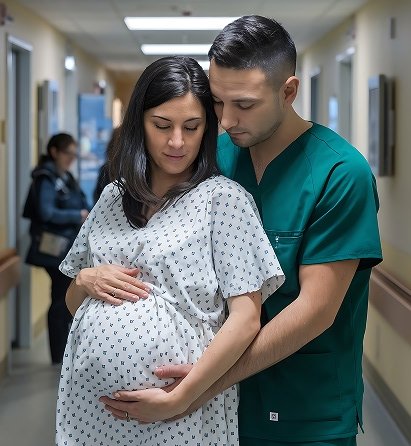
Not Sure If Laparoscopy Is Right for You?
Before booking any surgery, book a consultation with Dr. Mazen first. He’ll review your test results, walk you through what’s known and unknown about your case, and tell you honestly whether laparoscopy is likely to help — or whether IVF or another approach makes more sense for your specific situation. No pressure. No hard sell. Just a straight conversation about your fertility.
Book a Consultation with Dr. Mazen | 📞 +971 50 555 1964 | 💬 WhatsApp us for same-day booking

