
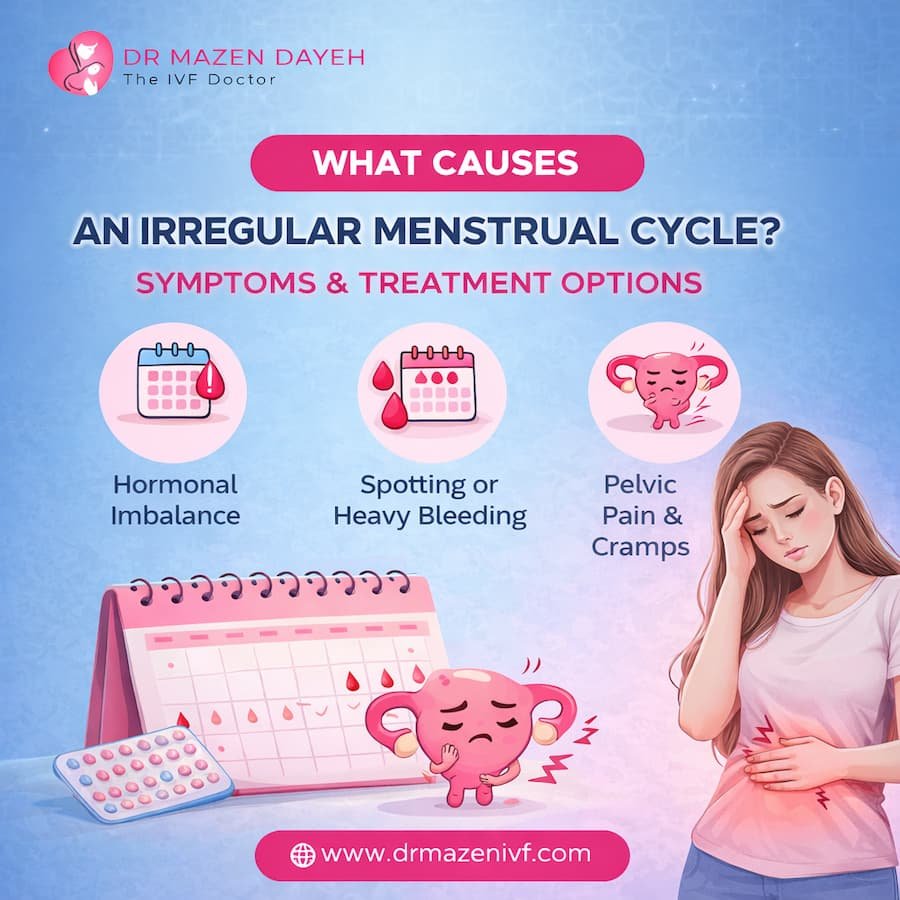
Menstrual cycles indicate a lot about a woman’s reproductive system. They usually last between 4 to 7 days, and occurs every 28 days. Sometimes, a cycle may also take place around 21 to 35 days. If a cycle occurs before 21 days or after 35 days, it is called irregular menstrual cycle. Being aware of what causes an irregular menstrual cycle and when to take medical help can ensure your reproductive health in the long run.
If you experience irregular menstrual cycle regularly, then it’s time to speak with a fertility doctor. In this blog, we will discuss about the symptoms associated with irregular periods, what causes it and treatment options available.
What Are Irregular Periods?
In irregular periods, menstrual cycles don’t adhere to a predictable cycle. Although small variations in the length of menstrual cycle are common, the frequent changes could be a sign of some underlying problem.
Menstrual irregularities can be described as:
- Periods that occurs fewer than 21 days or more than 35 days apart.
- Completely missing at least three periods in a row.
- The bleeding is significantly heavier or lighter than normal.
- Periods that lasts more than 7 days
- Severe pain, cramping, nausea, or vomiting during periods
- Spots or bleeding during periods or after intercourse
Women may experience occasional irregular periods, however, frequent irregularities indicate a health issue.
ALSO Read: 3 Signs Your Period Cycle is Healthy
Common Causes of an Irregular Menstrual Cycle
There are several factors that cause an irregular menstrual cycle. This includes weight gain or loss, lifestyle factors and medical issues. Some of the common causes are as follow-
1. Hormonal Imbalances
Menstrual cycles are dependent on hormones. If your hormones fluctuate, this can cause an irregular period. PCOS and thyroid issues effects your periods.
2. Stress
High stress affects your brain. It can cause issues with the Hypothalamus, which is responsible for managing menstrual hormones. Stress and sudden changes in your lifestyle can disrupt your periods.
3. Polycystic Ovary Syndrome (PCOS)
PCOS is among the most frequent causes of irregular menstrual cycles. When you suffer from this disorder, your ovaries release higher amounts of androgens (male hormones) that can hinder the ovulation process. Females who suffer from PCOS frequently experience irregular or no periods at all.
4. Endometriosis
The condition occurs when tissue that is similar to the uterine lining grows out of the uterus. The problem can cause extreme pain, bleeding that is not normal and menstrual cycle irregularities.
5. Pelvic Inflammatory Disease (PID)
PID can be described as a bacterial illness that affects reproductive organs. The most common cause is insufficient treatment for sexually transmitted infections. It is characterised by pelvic pain, irregular bleeding and an unusual vaginal discharge.
6. Thyroid Disorders
The thyroid gland has an essential role in the regulation of hormones. The two conditions, thyroid disorders, hypothyroidism (underactive thyroid), or overthyroidism (overactive thyroid), may affect menstrual cycles and cause irregular menstrual cycles.
7. Primary Ovarian Insufficiency
This is a condition that occurs when women’s ovaries cease to function normally before they reach the age of forty. This can cause infrequent periods and may affect fertility.
8. Lifestyle Factors
Certain lifestyle factors can impact the menstrual cycle, such as:
- Rapid weight loss or gains
- Excessive exercise
- Poor diet
- Insomnia and sleep deprivation
- Chronic health issue
9. Medications and Birth Control
Certain drugs, like blood thinners or steroids, can affect menstrual flow. The decision to stop or start hormonal birth control could create irregular periods for several months.
10. Pregnancy Complications
A miscarriage or an ectopic pregnancy could create irregular bleeding patterns and cycle. If you suspect that you are pregnant, consult a doctor immediately.
Symptoms That May Accompany Irregular Periods
The irregularity of the cycle is often followed by other symptoms, which could be a sign of health problems. This includes:
- Severe menstrual cramps
- Blood clots or excessive bleeding. clots
- Bleeding between periods
- Nausea or vomiting during menstruation
- Unusual vaginal discharge
- The duration of the period is more than 7 days
If you suffer from these symptoms frequently, you should talk to a doctor.
ALSO Read: Are Painkillers Safe to Use During Periods?
How Irregular Periods Are Diagnosed
Finding out the reasons behind irregular menstrual cycles typically begins by observing the menstrual pattern. The doctors often request that patients note:
- The dates for the beginning and ending of each phase
- Intensity of flow
- The level of pain or any other symptoms
The healthcare professional may be able to assist in:
- Examination of the pelvic
- Pelvic ultrasound for detecting fibroids, cysts or polyps
- A biopsy of the endometrium to determine if there are abnormal cells
- Hysteroscopy for examining the internal Uterus
A qualified fertility doctor in Dubai will perform these tests to pinpoint the root of the problem and develop an individual treatment strategy.
Treatment Options for Irregular Periods
The treatment is based on the root cause and the individual’s general health. A few of the more common choices are:
1. Hormonal Birth Control
Contraceptives can help control menstrual cycles and reduce the amount of bleeding. They can be:
- Birth Control Pills
- Hormonal IUDs
- Hormone injections
2. Medications
The doctor may prescribe medication to treat symptoms or ailments, for example:
- Tranexamic acid for severe bleeding
- Pain relief medications like Ibuprofen for cramps
- Antibiotics to fight illnesses
- Hormone treatment to balance hormones
3. Lifestyle Changes
Simple lifestyle changes can help manage menstrual cycles.
- Be sure to maintain your weight in a healthy range.
- Eat a healthy and balanced diet
- Relax and reduce stress with relaxation methods
- Exercise moderately
The changes could significantly enhance women’s menstrual cycle and balance.
4. Surgical Treatments
In certain situations, the need for surgery is not always a necessity. The options include:
- Endometrial ablation eliminates the lining of the uterus to stop heavy bleeding
- Myomectomy: Removes uterine fibroids
- Uterine arterial embolisation blocks blood flow to fibroids
- Hysterectomy. Elimination of the uterus when there are severe conditions
They are usually suggested only in cases where other therapies fail.
Final Thoughts
The irregular menstrual cycles could be the result of a variety of reasons, such as hormone changes, stress, lifestyle changes, and underlying medical conditions. If you are experiencing irregular periods, you should contact a fertility doctor in Dubai or near your location. The doctor will help you identify the cause behind it and will treat you accordingly.
