
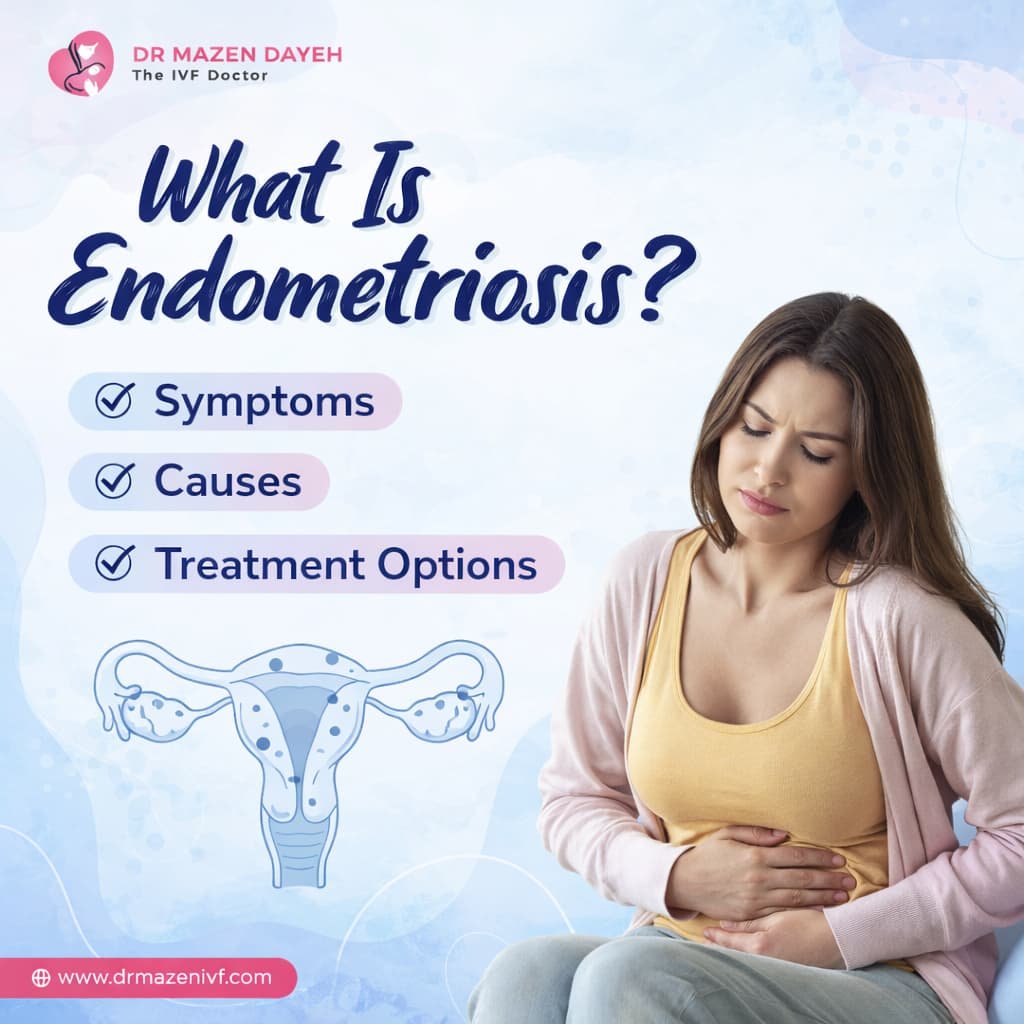
Many women experience strong period pain and believe it’s normal. Some women skip school or go to work each month. Others feel tired every day. Many try to get pregnant and aren’t sure what is preventing it from happening. In many instances, the cause could be endometriosis.
So, What Is Endometriosis?
Endometriosis occurs when tissue that resembles the lining of the uterus begins growing outside of the uterus. The tissue behaves similarly to the normal lining throughout your cycle. It becomes thicker, breaks down and is prone to bleeding. The issue is that when it expands outside of the uterus, blood is unable to move anywhere. This may result in pain, swelling, or scar tissue.
Endometriosis can be found most commonly in the Ovaries. However, it may also develop on the fallopian tube and the outer lining of the bladder, the uterus or even the bowel.
Types of Endometriosis
Doctors group endometriosis based on where it is found.
- Superficial peritoneal endometriosis
This is the most common and least severe type. The tissue attaches to the thin lining of the abdomen and pelvis.
- Endometriomas
These are cysts filled with dark fluid. They are often called chocolate cysts. They are most commonly found in the ovaries.
- Deeply infiltrating endometriosis
In this type, the tissue grows deep into nearby organs like the bladder, bowel, or rectum. In rare cases, scar tissue can cause organs to stick together. This is sometimes called a frozen pelvis.
- Abdominal wall endometriosis
Sometimes the tissue grows in a scar after surgery, such as a C section.
Symptoms of Endometriosis
Some women have no symptoms at all. Others may experience severe pain. The level of pain does not always match how serious the condition is.
Common symptoms include:
- Severe cramps during periods
- Lower back pain during periods
- Pain while passing stool or urine during periods
- Heavy or irregular bleeding
- Pain during sex
- Tiredness that does not go away
- Bloating
- Trouble getting pregnant
Women may also see blood in their urine or stool when they are having their period.
What are the main causes of endometriosis?
Many women wonder, What is the primary reason for Endometriosis? The honest answer is that doctors aren’t 100% sure.
There are several good theories.
One popular theory is the retrograde menstrual cycle. In this scenario, the menstrual blood flows backwards from the fallopian tube into the pelvic region. The blood cells can stick to organs and then start growing.
Genes could be a factor. If your mom or sister is suffering from endometriosis, the chances of you developing it are higher.
The hormone estrogen appears to assist in the growth of tissue. This is why the condition of endometriosis becomes more common in the reproductive years.
Other possible reasons include:
- Problems with the immune system
- Cells changing into endometriosis like cells
- Spread of cells through blood or lymph
- Surgical scars where cells attach after operations
Most likely, it is not just one cause. It may be a mix of several factors.
Who Is at Higher Risk?
Some women are more likely to develop endometriosis.
Risk factors include:
- Having a close family member with the condition
- Starting periods at a young age
- Short monthly cycles
- Heavy periods that last more than seven days
- Never having given birth
- High estrogen levels
But it is important to know that even women without these risk factors can still develop endometriosis.
Endometriosis and Fertility
Endometriosis is among the main causes of infertility among women.
The extra tissue may cause obstruction to the fallopian tube. When the tubes are blocked, eggs will not meet the sperm. Sometimes, the tissue is wrapped around the ovary and can affect egg release.
Scar tissue can alter the shape of pelvic organs. This can hinder the fertilisation process.
In certain cases, it can alter the egg’s quality or the inner lining of the uterus. This may make it more difficult for fertilised eggs to stick to the uterus lining.
Many women suffering from minimal or mild endometriosis may be able to get naturally pregnant. Some may require assistance through female infertility treatment options.
This could include:
- Drugs that help release more eggs
- IUI, in which sperm is put right into the uterus
- IVF, in which fertilisation takes place in a laboratory, and the embryo is then placed into the uterus
A timely diagnosis and proper treatment can increase the chance of pregnancy.
How Is Endometriosis Diagnosed?
Doctors usually begin by asking about your symptoms.
They may do:
- A pelvic exam
- An ultrasound
- MRI in some cases
The only sure way to confirm endometriosis is through a procedure called laparoscopy. In this minor surgery, a small camera is inserted into the abdomen to look for endometriosis tissue. A small sample may be taken to confirm the diagnosis.
Stages of Endometriosis
The doctors often categorise endometriosis into four stages:
- Stage 1: Minimal
- Stage 2: Mild
- Stage 3: Moderate
- Stage 4: Severe
The stages are determined by how large the tissue is, how deeply it has grown, and also by the presence of scar tissue.
It is crucial to realise that the stage doesn’t necessarily correspond with pain. A woman who is in stage 1 could experience extreme pain, whereas a woman with stage 4 could have minor symptoms.
Treatment Options for Endometriosis
There is no permanent cure yet. But treatment can control symptoms and improve quality of life.
Pain relief medicines
Over the counter medicines like ibuprofen may help with cramps and pain.
Hormone therapy
Hormone medicines reduce estrogen levels. This slows down the growth of endometriosis tissue. Options include birth control pills, hormone injections, or other hormone based treatments.
These treatments may stop periods for a while, which can reduce pain.
Surgery
Surgery removes visible endometriosis tissue. This can reduce pain and help with fertility. In extreme cases, surgical removal of the uterus and the ovaries could be recommended. It is typically considered only in cases where other treatments fail, and when pregnancy is not planned.
Treatments for fertility
If pregnancy is your primary objective, doctors might recommend female infertility treatment techniques like IUI or IVF. Treatment options are based on your age, the symptoms and stage of the disease.
ALSO Read: IUI Vs. IVF: Which Fertility Treatment Is Right for You?
Living with Endometriosis
Endometriosis does not only affect the body. It can affect mental health too. Chronic pain and fertility struggles can cause stress, anxiety, and sadness.
Support from family, doctors, and counselors can make a big difference. Healthy habits like regular exercise, balanced food, and stress management may also help reduce symptoms.
Conclusion:
You should now have an understanding of What is Endometriosis. It is a condition in which tissue that is similar to the uterus lining grows out of it. This could result in pain, heavy menstrual flow, fatigue and infertility.
The positive side is that treatment is readily available. The pain can be controlled. It is possible to treat fertility issues. Women can be healthy and have children if they receive the proper treatment.
If you’re experiencing intense period pain or having difficulty becoming pregnant, don’t ignore it. Seek expert guidance. Clinics such as Dr. Mazen IVF offer the latest fertility treatment and will help you choose the most effective female Infertility Treatment options based on your specific condition.
A timely diagnosis and the right treatment could transform your life.
